A comparison of hour meters for motocross and enduro bikes in 2026: spark-lead, battery-wired, vibration-based. Strengths and limits of each.
Sommaire · 8 parties
Looking for a reliable hour meter for your motocross or enduro bike? Here's an honest comparison of the 4 main families available in 2026.
011. Spark-lead hour meter (inductive)
The classic model, €15-25, sold everywhere.
How it works
You wrap a wire around the spark plug lead. The hour meter picks up the HT pulses and counts the hours the engine is running.
Known models
- Tiny-Tach Hour Meter
- Trail Tech Pro Tach Junior
- Hardline HR-9000
Pros
- Cheap (€15-30).
- No battery (self-powered by the HT pulses).
- Simple to fit.
Cons
- Very sensitive to HT interference: it can skip.
- Frequent bad contacts in motocross (mud, impacts).
- Illusory waterproofing despite the claimed IP67.
- LCD display that dies in hard frost.
- No history: you just see the running total.
Verdict
A stopgap solution. For serious use, forget it.
022. Battery-wired hour meter
For road-legal enduro bikes with a battery. You wire it to the switched +12 V.
Models
- Trail Tech Vapor (with other functions)
- Acewell ACE-2853
Pros
- More reliable than a spark lead.
- Display is often multifunction (speed, RPM).
Cons
- Counts while stationary if the ignition stays on (paddock time = wasted hours).
- Requires a 12 V electrical system (impossible on a pure motocross bike).
- More complex to fit (wiring to route).
Verdict
Fine for a road-legal enduro. Useless on a pure motocross bike.
033. Standalone vibration hour meter
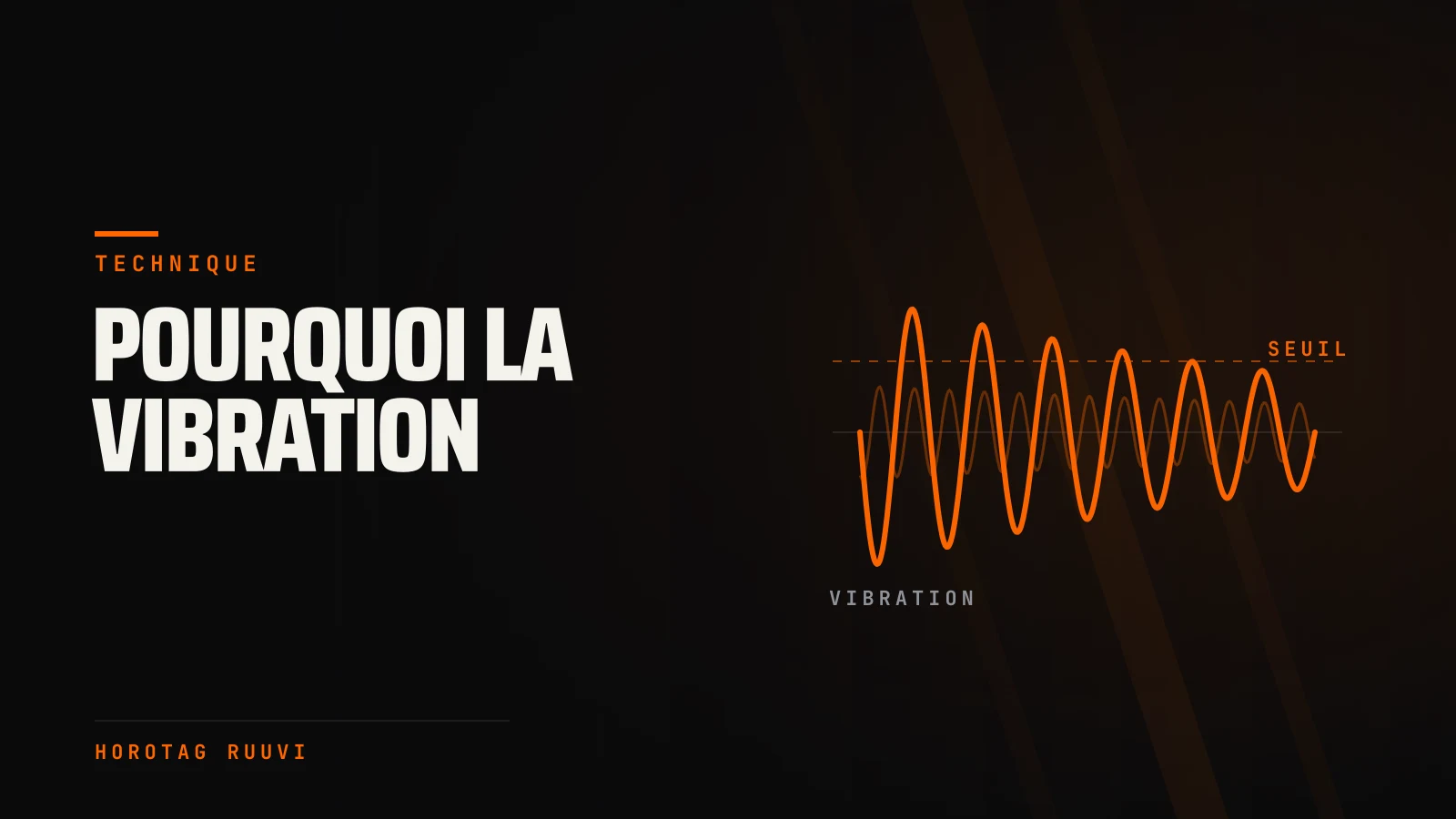
An accelerometer unit detects engine vibration and counts real running hours.
Models
- HOROTAG RUUVI (BLE, €129) — automatic hour counting by vibration, service logbook in the app. Built for motocross and enduro.
- HOROTAG GPS (4G cellular tracker, €299) — the essential GPS anti-theft device, for every bike including motocross, with a manual hour logbook.
- HOROTAG ULTIMATE GPS (premium 4G GPS tracker, €399) — a detailed track of every ride plus anti-theft, for sportsbikes, café racers and roadsters as well as demanding off-road use.
- Trail Tech Hour Meter Inductive (vibration version)
Pros
- Accuracy: counts only when the engine is running (vibration above a threshold).
- Genuine waterproofing: no wire, no exposed connector.
- No modification to the bike: you stick it on and you're done.
- Universal: works on 2-stroke, 4-stroke and electric.
Cons
- Higher price (€60-150).
- Battery to replace every 3-5 years.
Verdict
The best compromise for regular motocross use or competition.
044. Connected hour meter (Bluetooth + app)
A vibration hour meter plus a mobile app for the history.
Models
- HOROTAG RUUVI: automatic hour counting for motocross and enduro, with a built-in service logbook.
- Trail Tech Endurance (with adapter)
Pros
- Full history in the app (hours per session, terrain, date).
- Maintenance alerts: oil change, pads, top end.
- Digital service logbook, signed, for resale.
- Offline sync: you don't need signal in the paddock.
Cons
- Initial outlay of €129-200.
- An app to install (but free for life with HOROTAG RUUVI, no subscription).
Verdict
The one to go for if you want real tracking of your bike over the long term. It's exactly what we build at HOROTAG.
05Summary table
| Type | Price | Accuracy | History | Recommended for |
|---|---|---|---|---|
| Spark lead | €15-30 | Poor | No | A stopgap |
| Battery-wired | €30-80 | Good | No | Road-legal enduro |
| Vibration only | €60-150 | Excellent | No | Regular motocross |
| Connected + app | €129-200 | Excellent | Yes | Competition / serious riders |
06Why counting hours actually matters
- Servicing at the right interval: no more 80 hours without an oil change "because you forgot".
- 2-stroke top end at the right moment: you avoid an engine failure (€1,000-2,000).
- 4-stroke valve checks on time: same story.
- Easier resale: serious buyers demand verifiable hours.
- Price leverage: a bike showing 80 metered hours is worth €500 to €1,500 more than one with "estimated" hours.
07Our final recommendation
If you're starting out or ride 1-2 times a month, a simple vibration hour meter (~€70) is enough. You'll know your hours, and that's the essential part.
If you ride regularly (every month) or you plan to sell cleanly: get a connected unit with a logbook. The investment pays for itself quickly through resale value and the engine failures you avoid.
08HOROTAG RUUVI does exactly that
A vibration unit, a free-for-life iOS and Android app, a signed service logbook, €129 paid once. Designed and made in France.
And if theft is your worry as much as maintenance, HOROTAG GPS is the essential 4G anti-theft tracker — motocross bikes included — while HOROTAG ULTIMATE GPS logs a detailed track of every ride.
Carnet d'heures scellé — trois solutions, à toi de choisir.
RUUVI 129 € (Bluetooth, compteur d'heures auto), GPS 299 € (traceur GPS anti-vol), ULTIMATE GPS 399 € (tracé GPS détaillé + anti-vol, carnet manuel). Aucun abonnement.
Comparer les trois