GPS, mobile networks, battery life, alerts: what a motorcycle tracker really does day to day, and the things it will never do.
Sommaire · 6 parties
On paper a motorcycle GPS tracker is simple: "it tells you where your bike is". In practice there are two distinct technologies behind that sentence, and knowing which is which stops you buying with the wrong expectations.
01Two building blocks, not one
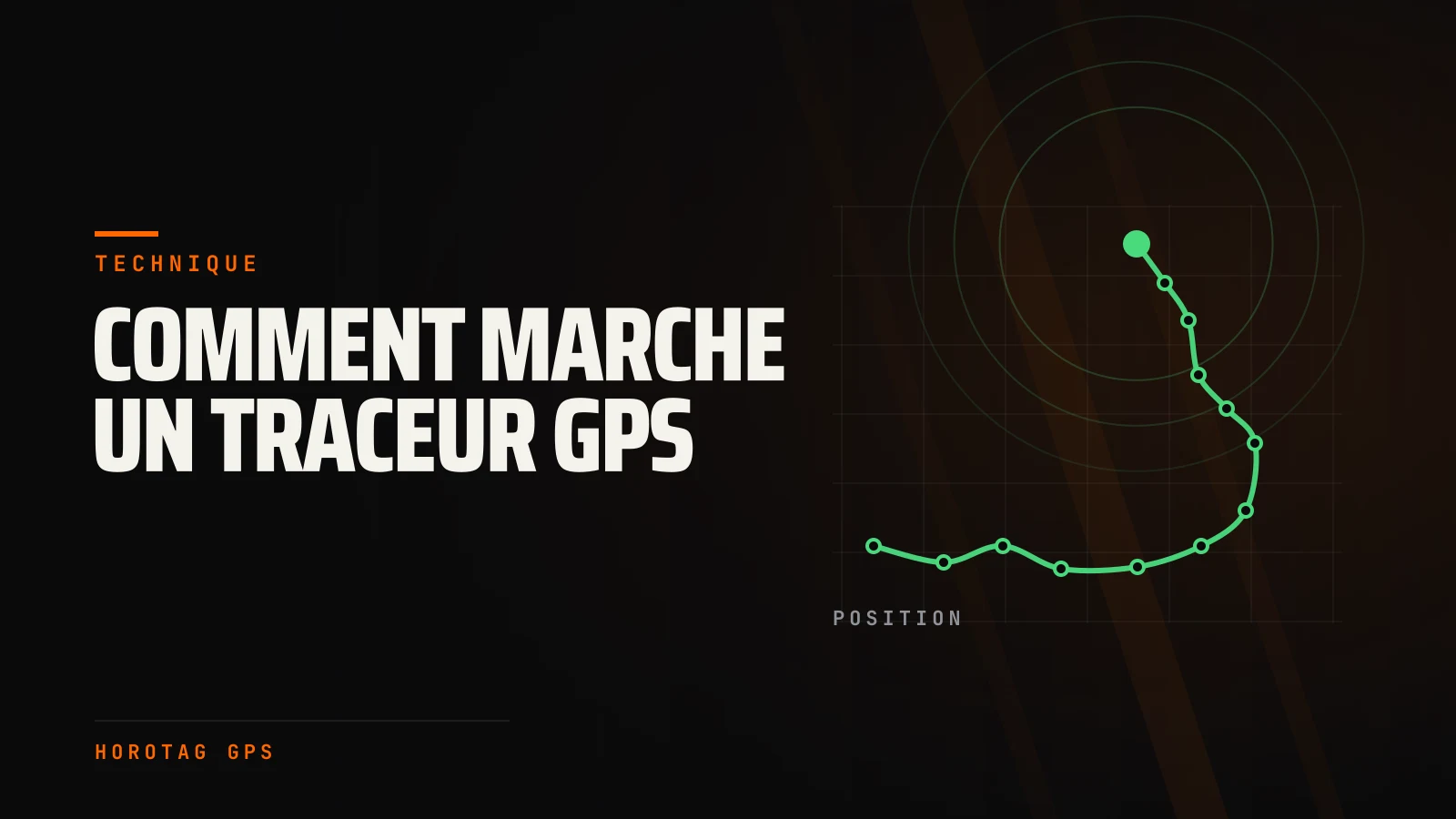
1. GPS receives. The device listens to satellites and works out its own position. That is pure reception: it transmits nothing to the satellites, and the satellites have no idea it exists. It needs sky — at least partially.
2. The mobile network transmits. A built-in SIM sends the calculated position to the servers, which display it in your app. That part needs operator coverage.
Hence the rule worth memorising: no sky means no fresh position; no network means a known position that has not been reported yet. A tracker at the bottom of an underground car park usually knows where it was on the way in, not where it is now.
02Why it does not report continuously
The radio consumes vastly more than everything else combined. A tracker reporting its position every ten seconds, permanently, would last days rather than months.
So a motorcycle tracker spends most of its life asleep, woken by movement:
- Bike stationary: it speaks rarely, just enough to stay reachable.
- Bike moving when it should not be: it wakes up and reports.
- Theft confirmed: it switches to live tracking, with tight reporting intervals and battery life deliberately sacrificed.
That battery-life versus position-freshness trade-off is the only real engineering question in a tracker. Everything else is interface.
03What it changes day to day
Honestly? Nothing, most of the time. A good tracker is a device you forget owning. What it changes happens at three specific moments:
- Doubt. You cannot remember whether you parked on the street or round the corner after a long evening. You open the app.
- The alert. The bike moves at 3am. You know immediately, not at breakfast.
- The theft. You go from "it's gone" to timestamped positions you can hand to the police.
On HOROTAG GPS and HOROTAG ULTIMATE GPS, all three are covered by the same building blocks: movement alerts, trusted zones (your own garage does not need to notify you), a riding mode to mute alerts temporarily when you are the one taking the bike out, live tracking, and a timestamped PDF theft report.
Alerts offer three responses: "this is normal", "I'm checking", "this is a theft". That middle one is the most useful function in the whole system: in real life you do not know yet, and you should not have to lie to your app to buy yourself time.
04What a tracker does not do
This needs saying, because plenty of product pages imply otherwise:
- It does not prevent theft. It is not a lock, it is a witness.
- It does not cut the engine remotely.
- It cannot see through concrete, or inside a closed metal box.
- It does not replace your police report: you report, the police act.
At HOROTAG there is also no movement-sensitivity setting, no SMS or e-mail alerts, and no list of extra contacts to notify. Notifications go through the app, full stop.
05And engine hours?
This is the most common confusion, so let us be blunt.
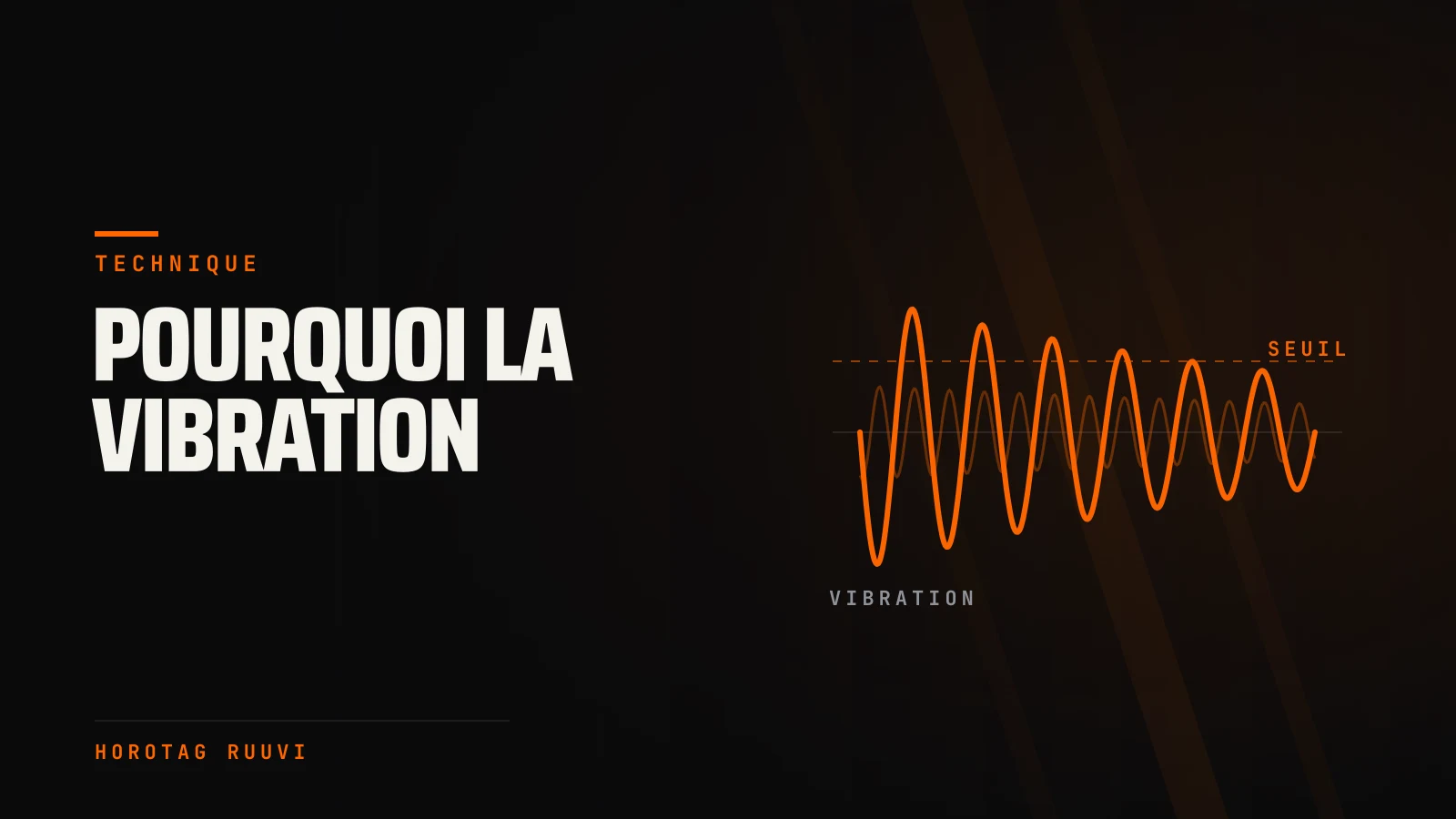
- HOROTAG RUUVI (€129): an automatic hour meter. It detects engine vibration and counts on its own. It is the tool for motocross and enduro, where servicing is driven by hours.
- HOROTAG GPS (€299) and HOROTAG ULTIMATE GPS (€399): these are GPS trackers. Engine hours are entered manually in the logbook. On a road bike that is not a problem: servicing there runs on mileage, not hours.
If someone sells you a GPS tracker promising automatic engine hours, ask how. The answer is usually "we estimate them".
06Choosing without regret
- You mainly want to know where your bike is and be warned if it moves: HOROTAG GPS, €299.
- You want that plus a detailed trace of every ride, corner by corner: HOROTAG ULTIMATE GPS, €399.
- You ride motocross or enduro and your first need is hour-based servicing: HOROTAG RUUVI, €129 — and nothing stops you pairing it with a tracker.
The bad purchase is the one made on a promise. Read the list of features that actually exist, and compare that instead.
Tracker + anti-vol pour tous motards, c'est HOROTAG GPS.
Position toutes les 4 h / 30 min en mouvement, anti-vol passif, carnet manuel scellé. 299 €, SIM 4G IoT 10 ans incluse, aucun abonnement.
Voir HOROTAG GPS